
5 Reasons to Choose Pasture Raised Pork
While a startling 98% of pork sold for human consumption in the US is raised inside of indoor concentrated animal feeding operations (CAFOs), we raise our pigs outdoors, rotating them to fresh ground every single week.
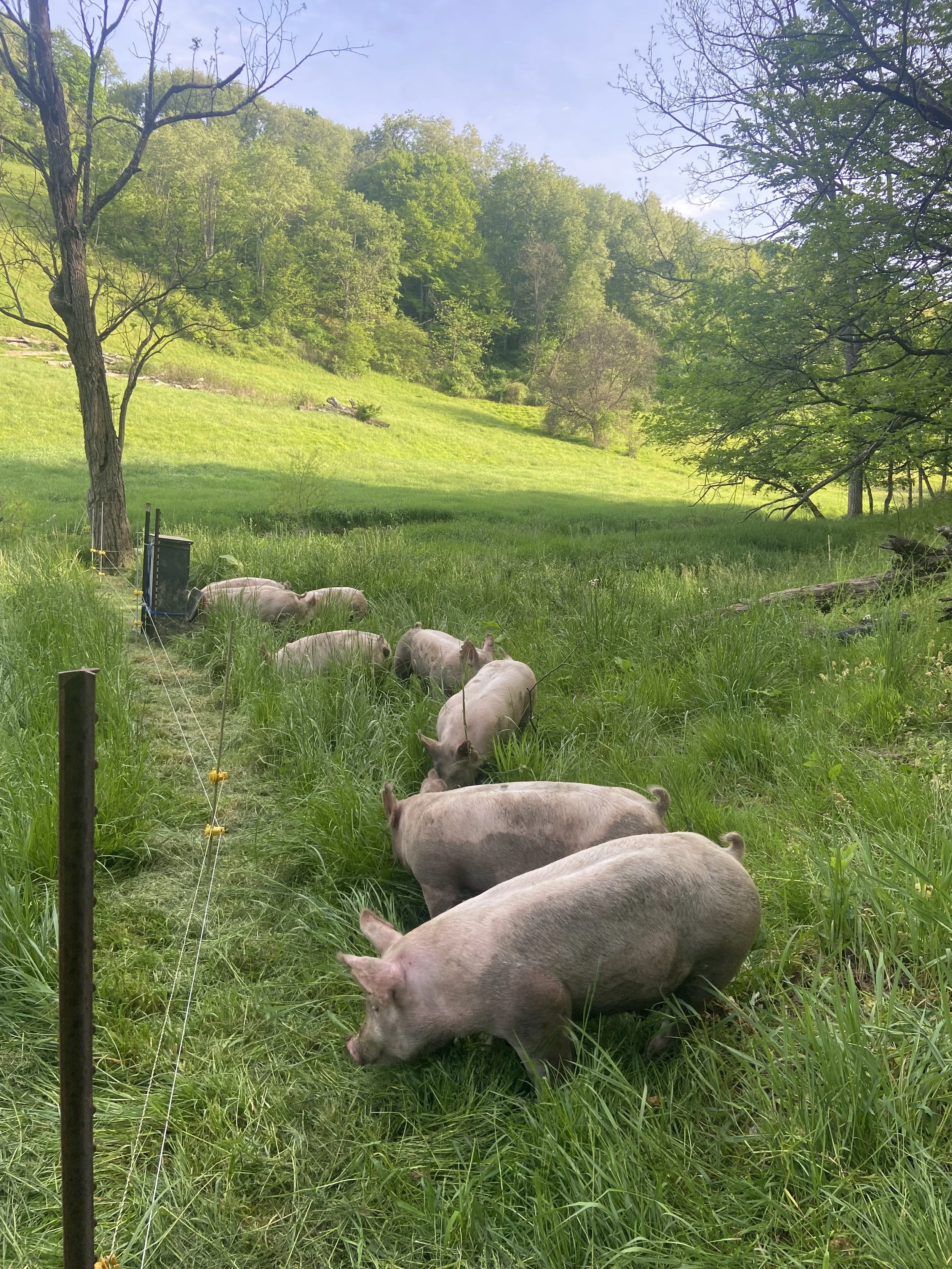
Pigs on our farm enjoying fresh pasture.
Our primary reason for raising our pigs outdoors with a life spent on pasture and in the forest is to provide you and your family with a high quality meat product. We believe that good food begins with quality ingredients, and quality ingredients begin with respecting and nurturing the land and animals that provide them.
While there are countless benefits to raising pigs on pasture, these are 5 reasons why choosing pasture raised pork stands out to us.
1) Nutrition
Research suggests that pasture raised pork can have a different nutritional profile than conventionally raised pork. Conventionally raised pigs a strict grain-based diet, while pastured pigs enjoy vegetation, bugs, and other tasty grub, in addition to supplemental grain. Pasture raised pork can have 2X more vitamin E as a result of the pig’s fresh forage diet - it’s a natural antioxidant that helps protect cells and supports immune function. Pigs raised on pasture can also have up to 3X more vitamin D deposited into their meat, thanks to exposure to natural sunlight. Vitamin D helps support bone health, muscle function, immune health, and more. Pastured pork can also contain more omega-3 fatty acids, and a more favorable omega-6 to omega-3 ratio, due to their more diverse diet consisting of fresh forage. Omega-3 fatty acids are touted for reducing inflammation.
2) Flavor & Texture
Pasture raised pork has a deeper, richer flavor. It naturally has a more savory and complex flavor profile than conventionally raised pork due to the diverse diet the pigs enjoy on fresh pasture and forest ground. Our pigs eat walnuts, grubs, roots, leaves, berries, and whatever they can dig up that looks appetizing to them! Because we move them every week, they get a brand new buffet of a variety of foods on a regular basis, in addition to the supplemental grain we feed them. Pigs raised in confinement live shoulder to shoulder and have no room to move, whereas our pigs are running and rooting every day. This daily exercise works their muscles and creates a firmer, more succulent texture of the meat product. Some studies have shown that pasture raised pork cooks 20% faster as a result of this.
3) Animal Welfare
An obvious reason to choose pasture raised pork is the life of the pig. Pigs raised in CAFOs do not get access to vegetation, sunlight, or even regular movement. Pastured pigs are outdoors, allowed to express their natural instincts and behaviors. They enjoy rooting, running, and wallowing. They eat a better diet, and enjoy expressing their natural omnivorous foraging behaviors.
4) Support of Local Food Systems
Every dollar you spend supporting a local, ethical farmer is a dollar that doesn’t support CAFO factory farming. This not only stimulates the local economy and supports small family businesses, but it votes for a more locally driven food system and community sufficiency, as opposed to corporate reliance. Choosing locally grown, pasture raised pork is essentially voting for local food systems with your money.
5) Land Improvement
Pigs get a bad rap for being destructive, but managed well, they actually improve overall land fertility, diversity, and quality. Big impact, short time period is the key to managing land with pigs. A pig’s snout literally acts as a natural shovel as they root around, digging up roots, bugs, and other tasty treats in the soil. By digging the earth, pigs can aerate compacted soil, reduce unwanted plants, and increase overall soil health by stimulating seed fertilization via increased seed contact with soil. They can also fertilize the soil with high quality nutrients available in their manure and urine. Pigs can be a key feature in healing the land and leaving it better than it was found, if managed properly.
While there are a number of reasons to look more deeply into the way your meat is raised and cared for, these are five that stand out to us in favor of pasture raised pork.
Thanks for caring about where your food comes from!
- Hannah